AI for Paid Media: Optimizing Google Ads and Meta Campaigns with Machine Learning
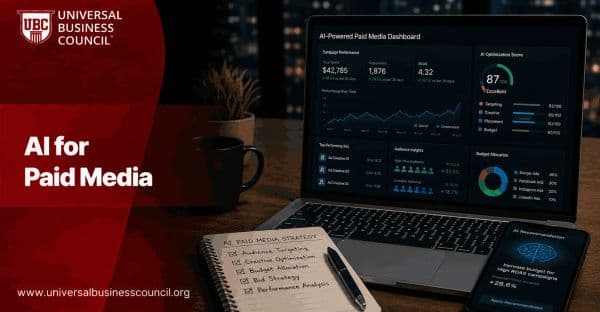
Learn how AI for paid media improves Google Ads and Meta performance through smart bidding, Advantage+ automation, better creative testing, and modern measurement.
Browse the latest digital marketing articles, tutorials, and research from Universal Business Council.(210 articles)
Learn how AI for paid media improves Google Ads and Meta performance through smart bidding, Advantage+ automation, better creative testing, and modern measurement.
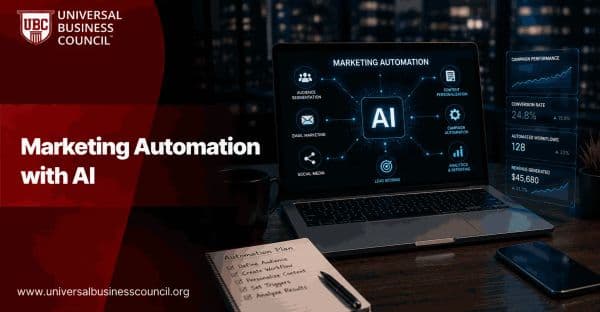
Learn how marketing automation with AI enables real-time orchestration across email, SMS, and web, using next-best-action decisioning and predictive personalization.
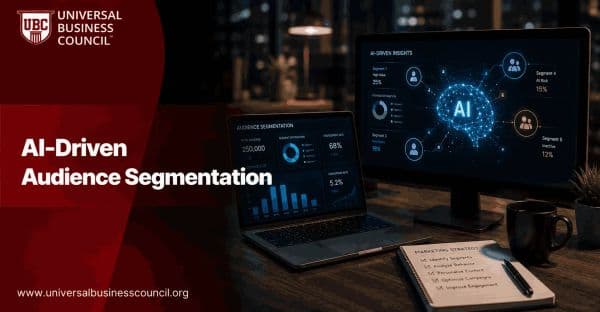
AI-driven audience segmentation uses machine learning to create real-time, intent-rich micro-clusters that improve targeting, personalization, and ROI across channels in a privacy-first way.
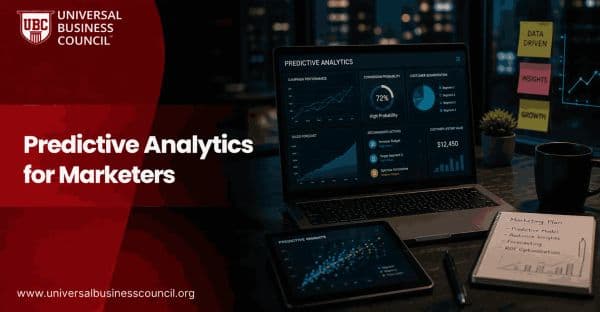
Learn how predictive analytics for marketers uses AI to forecast demand, leads, and revenue, improve ROI with MMM and lead scoring, and operationalize forecasts in campaigns.
AI SEO in 2026 focuses on rankings, CTR in generative SERPs, and topical authority. Learn ML-driven workflows for intent modeling, AEO and GEO visibility, and content hub architecture.
Learn how to scale generative AI for content marketing with a governed human-AI-human workflow that protects brand voice, accuracy, and consistency.
A practical, step-by-step AI-powered digital marketing strategy framework covering goals, data, tools, automation, AEO, governance, and team capability.
Social media has become one of the most influential communication channels for businesses, creators, and organizations. Platforms such as Instagram, LinkedIn, TikTok, and Facebook enable brands to reach massive audiences, but publishing content alone does not guarantee results. To improve…
Modern marketing is slowly turning into a science experiment with budgets. Brands no longer rely only on surveys or focus groups to understand customers. Instead, they analyze how the brain reacts to advertisements, packaging, and digital experiences. This approach is known as neuromarketing.…
Modern consumers expect brands to understand their needs almost instantly. Generic advertising and mass messaging rarely create meaningful engagement anymore. Businesses now rely on data analytics to deliver personalized experiences that match individual interests, behavior, and preferences.…
Customers no longer interact with brands through a single channel. A person might discover a product on social media, research it on a website, read reviews on a mobile app, and finally purchase it in a physical store. Because of this behavior, businesses are adopting omnichannel marketing systems…
Brand positioning strategy refers to the deliberate process of shaping how a brand is perceived in the minds of its target audience. It defines the unique value a company offers and explains why customers should choose it over competitors. In simple terms, positioning determines the place a brand…