

Research & Knowledge Hub
1,550+ research articles, technical guides, and in-depth analyses authored by council members and industry experts.
Articles - Page 4
1,550 articles

Responsible Generative AI: Risks, Principles and Best Practices
Learn what responsible generative AI means and how organizations can develop and use generative AI systems ethically. Explore key principles, including fairness, transparency, privacy, accountability, safety, and human oversight, along with practical strategies for reducing risks and building trustworthy AI applications.

ISO/IEC 23894 and AI Risk Management: What Organizations Need to Know
Understand ISO/IEC 23894 and its role in managing risks associated with artificial intelligence. Explore the standard's key guidelines, risk assessment processes, and practical implementation steps to help organizations identify, evaluate, and address AI risks while supporting responsible and trustworthy AI development.
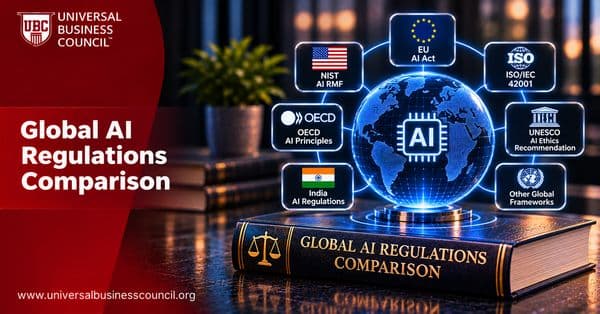
Global AI Regulations Compared: EU, US, UK and India
Compare AI regulations across major regions, including the European Union, United States, China, India, and other leading AI markets. Explore key regulatory frameworks, compliance requirements, and differences in governance approaches to understand how global AI policies shape responsible AI development and business operations.

Responsible AI Regulations in India: Laws, Guidelines and Compliance Considerations
Explore the regulatory landscape for responsible AI in India, including government policies, legal frameworks, and key guidelines governing artificial intelligence. Learn how Indian organizations can address AI ethics, data privacy, algorithmic bias, transparency, and accountability while aligning with responsible AI practices.
UNESCO Recommendation on the Ethics of AI
Explore UNESCO's Recommendation on the Ethics of Artificial Intelligence and understand how it guides the responsible development and use of AI. Learn about its core principles, policy recommendations, and focus areas, including human rights, fairness, transparency, privacy, sustainability, and accountability.

OECD AI Principles: Guidelines for Responsible AI Development
Understand the OECD AI Principles and how they guide the development and use of trustworthy artificial intelligence. Explore the five core values-based principles and recommendations covering inclusive growth, human rights, transparency, robustness, safety, and accountability, along with their role in shaping responsible AI policies worldwide.

ISO/IEC 42001 Explained: AI Management Systems and Certification Requirements
Understand what ISO/IEC 42001 is and how this international standard helps organizations establish, implement, and maintain an Artificial Intelligence Management System (AIMS). Explore its key requirements, benefits, certification process, and role in promoting responsible AI governance, risk management, transparency, and accountability.
NIST AI Risk Management Framework: A Practical Implementation Guide
Explore the NIST AI Risk Management Framework and learn how to implement it across the AI lifecycle. Understand its four core functions, Govern, Map, Measure, and Manage, along with practical steps for identifying AI risks, improving accountability, and building trustworthy AI systems.

EU AI Act Explained: Risk Categories, Requirements and Business Implications
Understand the EU AI Act, its risk-based categories, key compliance requirements, and business implications. Explore how the regulation classifies AI systems, what obligations apply to different risk levels, and how organizations can prepare for compliance while adopting responsible AI practices.

AI Governance for Enterprise Leaders: A Step-by-Step Implementation Guide
Learn how enterprise leaders can implement effective AI governance through a step-by-step approach. Explore key strategies for establishing governance policies, defining responsibilities, managing AI risks, ensuring regulatory compliance, and promoting transparency and accountability across enterprise AI initiatives.
Responsible AI Policies: How to Create an Enterprise AI Policy
Understand what responsible AI policies are and why organizations need them to guide the ethical development and use of artificial intelligence. Explore key policy components, including data privacy, fairness, transparency, accountability, risk management, and human oversight to support responsible AI adoption.

AI Accountability Framework: Roles, Responsibilities and Oversight
Understand what an AI accountability framework is and how it defines roles, responsibilities, and oversight throughout the AI lifecycle. Explore key governance practices, human oversight mechanisms, and accountability structures that help organizations manage AI risks, ensure transparency, and promote responsible AI use.